Hunting Africa With DGI
Africa is closer than most hunters think. We run our safaris with Dangerous Game Inc. — Rob's longtime partner Alex Krugel — across South Africa, Zimbabwe, and Zambia. Plains game to dangerous game, paperwork handled.
Africa is closer than most hunters think. I'm not talking about the flight, though that's easier than people expect either. I'm talking about the cost. There's a notion out there that a safari is a once-in-a-lifetime, sell-the-truck, second-mortgage kind of trip. It isn't. For about what you'd pay for a premier Texas whitetail hunt, you can fly to southern Africa, sleep in good lodging, eat better meals than you do at home, and put several plains-game animals on the ground. When I lay that out for guys who've spent years chasing one good Texas buck, they tend to go quiet for a minute. Then they start asking real questions.
Here's how we got into it, because it matters who you go with. We run our African hunts through Dangerous Game Inc., DGI, and my longtime partner over there, Alex Krugel. Alex and I have been working together better than fifteen years. I've got roughly twenty years in Africa myself and somewhere around seventy-five safaris under my belt at this point, so this isn't a side gig I bolted on to sell more hunts. We're owners and partners in what we do, the same way we run the ranch up here in Saskatchewan and Alberta. When you book Africa with us, you're not handed off to a booking agent who's never set foot on the concession. You're hunting with people I've trusted with my own hunts for over a decade.
The other thing that scares hunters off Africa is the unknown. The paperwork, the rifles, the export of your trophies, the worry that something goes sideways nine time zones from home and you're on your own. DGI takes all of that off your plate. They own rifles you can use right in camp, so you don't have to wrestle your own gun through international airports and customs if you'd rather not. The hunts are quota-managed, which keeps the animals and the concessions healthy year after year, and DGI handles the CITES export side so your trophies get home the right way. The friction that keeps North American hunters home is the stuff we've already solved a hundred times over.
Let me paint the country, because Africa isn't one place. Across South Africa we hunt several concessions, each with its own feel. The flagship is up in Northern Limpopo, roughly seventy thousand acres with a five-star tented camp sitting on it. If 'tented camp' makes you picture roughing it, don't. This is the real deal, canvas walls and a comfortable bed and food that'll spoil you for home cooking, all out in genuine bush. We also hunt the Kalahari, with that red sand and big open country, and Kimberley, and Bela Bela. Cross the border into Botswana and we've got the Tuli Block and fly camps over toward Chobe. We hunt Zimbabwe and Zambia too. Different ground, different game, different experience depending on what you're after and how much time you've got.
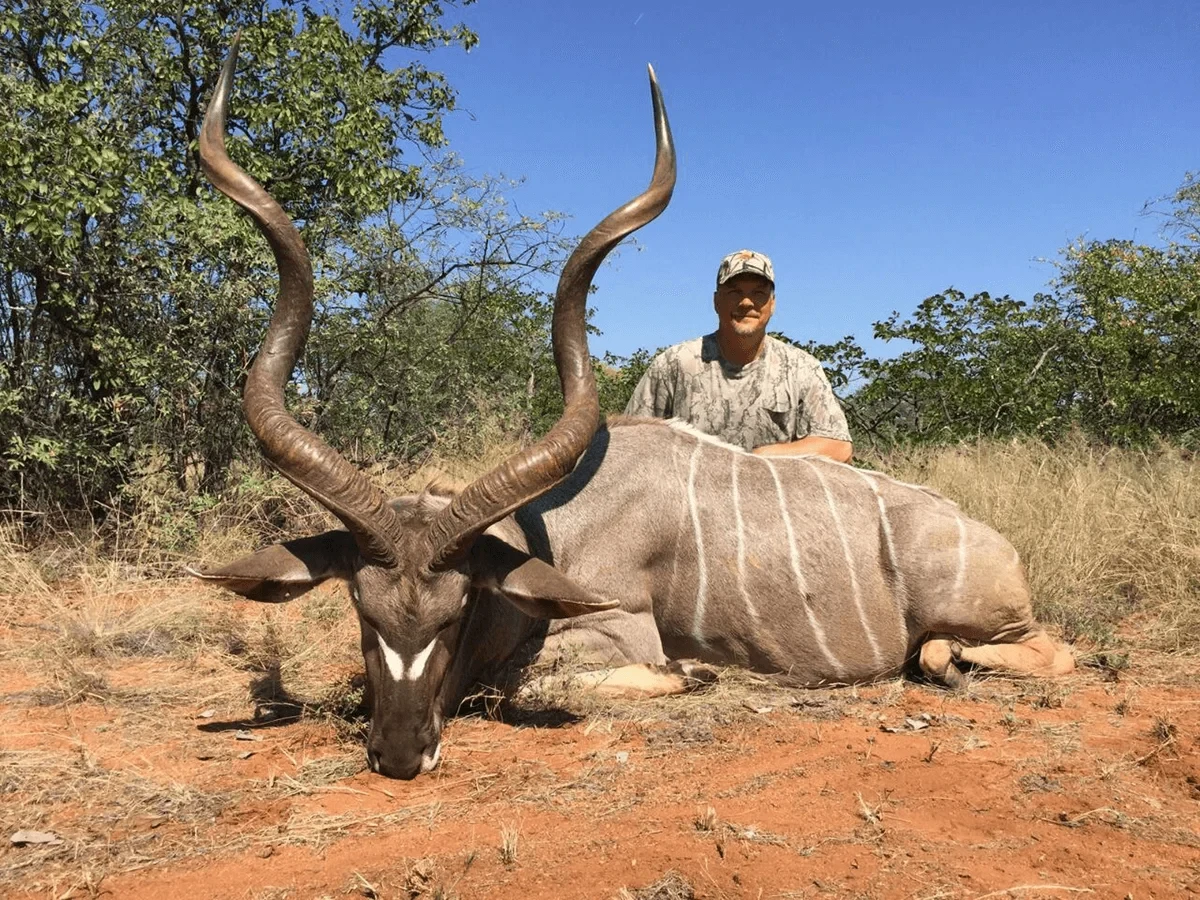
For most first-timers, a plains-game safari is the way in, and it's a fantastic hunt in its own right, not a consolation prize. The species list is long and the animals are genuinely beautiful. Kudu, the gray ghost with those big spiraled horns, is the one most guys put at the top of the list, and rightly so. Impala are everywhere and a blast to hunt. Gemsbok carry those long straight rapiers and live in the harsh, open country. There's sable and roan, which are about as striking as anything that walks. Warthog will make you laugh and then make you work. Zebra, nyala, eland, the biggest of the antelope, and springbok bouncing across the flats. A plains-game hunt usually means a lot of glassing, a lot of stalking on foot in warm, dry country, and chances at several different animals over the course of a week. It's active hunting. You earn them.
The pace of a plains-game safari suits a hunter coming off a North American season. The terrain is open enough that you spend real time behind glass, picking apart the bush and the tree lines, sorting a mature animal from a young one. Then it's a stalk, often a long one, working the wind the same way we do up here in the cutlines and river hills. The shooting can be close or it can stretch out, so you want to know your rifle and your hold. If you're using one of DGI's rifles, you'll confirm zero in camp before you hunt, same as we have you confirm your zero at the range on arrival day back home. Good habits travel.
Once a hunter gets a taste, a lot of them want to step it up, and that's where the dangerous game comes in. Cape buffalo is the one that hooks most everybody. There's a reason they call it the black death, and there's a reason a buffalo on the ground means more than the size of his boss. It's the closest thing in hunting to a fair argument with an animal that can argue back. We also hunt elephant and leopard, and we've got lion in the Kalahari. These are serious hunts that you don't walk into cold, but they're the real article, the kind of dangerous-game hunting that built the whole tradition. You don't have to start there. But it's good to know the ladder is right in front of you when you're ready to climb it.
Why should a North American hunter actually consider this? Beyond the cost, which is the headline, it's the sheer variety and the quality of the days afield. A week in Africa you might glass and stalk five or six completely different species across country you've only ever seen on TV. The animals are abundant on these concessions because the quotas are managed for the long haul. The lodging and the food are genuinely good. And you're doing it with an outfit that has skin in the game, not a middleman. I've shot a lot of my television work over there for the same networks I shoot back home, and the footage practically makes itself because the hunting is that good.
I won't pretend it's identical to a hunt at the ranch. Up here you fly into Edmonton or Saskatoon and drive in yourself, you hunt elk in the September rut or chase those mass-heavy Saskatchewan whitetails in the cold, and it's a different rhythm entirely. Africa is its own animal, warm and open and full of species you can't hunt anywhere on this continent. But the thread that runs through both is the same. We hunt our own ground, or our partner's ground, with people we've worked alongside for decades. We don't sell you a hunt and disappear. Alex on the African side is cut from the same cloth as the guides and staff who've been on our Canadian land for twenty years and more.
If you're a hunter who's been telling yourself Africa is somewhere down the road, after the kids are grown or the boat's paid off, I'd push back on that gently. The math doesn't support waiting. The price of one good Texas whitetail hunt gets you on a plane and into a tented camp in the Limpopo bush with several animals in your sights. The paperwork's handled. The rifles are there if you need them. The export is taken care of. All you really have to do is decide.
A practical note on how to think about timing. Africa runs on its own seasons and the good concessions and camps fill up the same way our elk rut sells out a year ahead. If you've got a window in mind, the earlier you start the conversation, the more we can tailor the trip, plains game only, a buffalo add-on, a particular concession you've read about. We can build it around what you actually want instead of forcing you into a fixed package. The more lead time we have, the better the hunt we can put together for you.
If any of this is rattling around in your head, the best thing to do is pick up the phone and talk it through with us. We'll be straight with you about cost, about what's realistic on your timeline, about which concession fits the game you want and the experience you're after. No pressure and no salesman routine, just one hunter talking to another about a trip that's a whole lot more reachable than the stories make it sound. Give us a call at 780-871-1747 and we'll get the conversation started. Africa's closer than you think, and it always has been.